
Pond Aeration for Livestock Ponds: Healthier Water, Healthier Animals
Feb
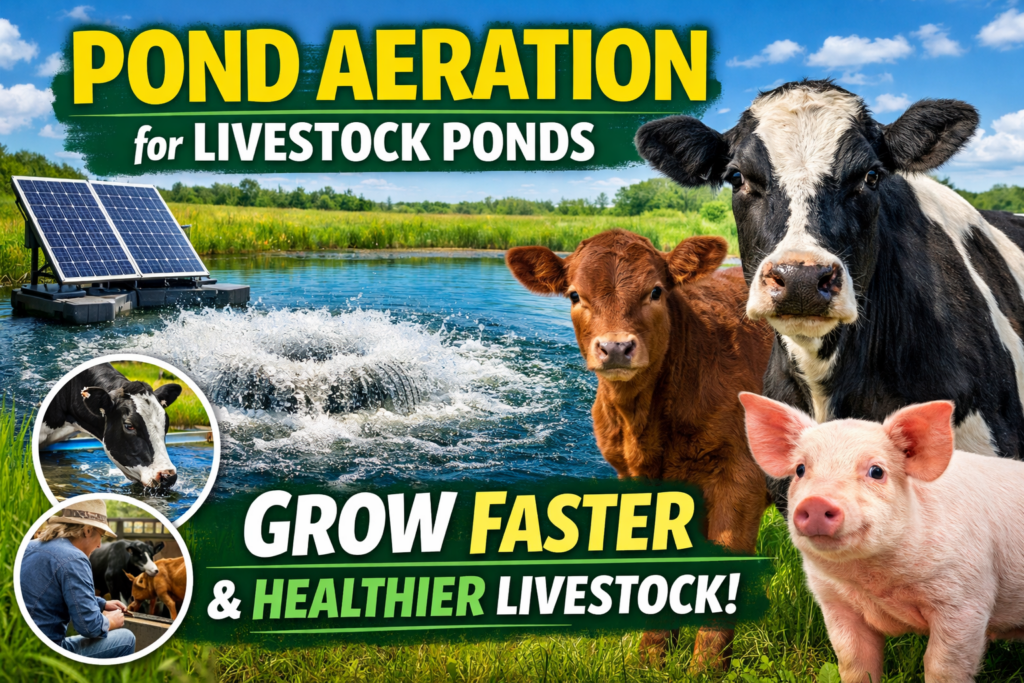
Livestock ponds are more than just a water source—they play a direct role in animal health and performance. When pond water becomes stagnant, low in oxygen, or overloaded with algae and bacteria, it can negatively affect the livestock that rely on it every day. That’s where pond aeration makes a real difference.
Pond aeration works by increasing dissolved oxygen levels throughout the water column. This added oxygen helps prevent stagnation, reduces harmful bacteria, and limits excessive algae growth. The result is cleaner, fresher-tasting water that animals are far more willing to drink.
Multiple agricultural and livestock studies have shown that cattle and other livestock that consume clean, oxygen-rich water tend to drink more frequently, digest feed more efficiently, and experience improved weight gain. Better hydration supports healthier rumen function, stronger immune systems, and reduced stress—key factors in faster growth and overall herd health.
Aerated water also helps break down organic waste on the pond bottom, reducing foul odors and preventing the buildup of anaerobic bacteria that can contaminate drinking water. During hot summer months, aeration is especially important, as warm water holds less oxygen and can quickly become unhealthy without circulation.
For ranchers and landowners, pond aeration is a simple, low-maintenance way to improve water quality without chemicals or constant intervention. Healthier water leads to healthier livestock—and healthier livestock means better performance, lower veterinary costs, and improved long-term productivity.
In short, aerating livestock ponds isn’t just about water quality—it’s an investment in the health and growth of your animals.

Pond Aeration Benefits: Why Some Aquatic Weeds and Algae Are Good for a Healthy Pond
A crystal-clear pond may look beautiful, but a completely weed-free pond is not always the [...]
Apr

What Size Aerator Do I Need for a 1-Acre Pond?
If you have a 1-acre pond, choosing the right aerator isn’t about picking the biggest [...]
Mar

Why Rising Energy Costs Make Windmill Pond Aerators the Smart Choice
Energy prices around the world are under increasing pressure. Global geopolitical tensions, growing energy demand, [...]
Mar

How to Get Rid of Duckweed Algae in Your Pond (And Keep It from Coming Back)
Duckweed may look harmless at first, but when it spreads across the surface of your [...]
Mar

Best Ways to Get Rid of Cattails in Your Pond (And Keep Them From Coming Back)
Cattails may look natural along the shoreline, but if left unchecked, they can quickly take [...]
Mar


5 Questions to Ask Before Buying a Wind-Powered Pond Aerator
Purchasing a wind-powered pond aerator is an investment in your pond’s health, so don’t settle [...]
Feb

Top 10 Reasons to Choose a Joe Mescan Windmill Pond Aerator
Looking for the best wind-powered pond aerator? Joe Mescan Windmills lead the industry for a [...]
Feb
